Rare Diseases in India: What It Means, What Exists, and What to Do Next
4 min read
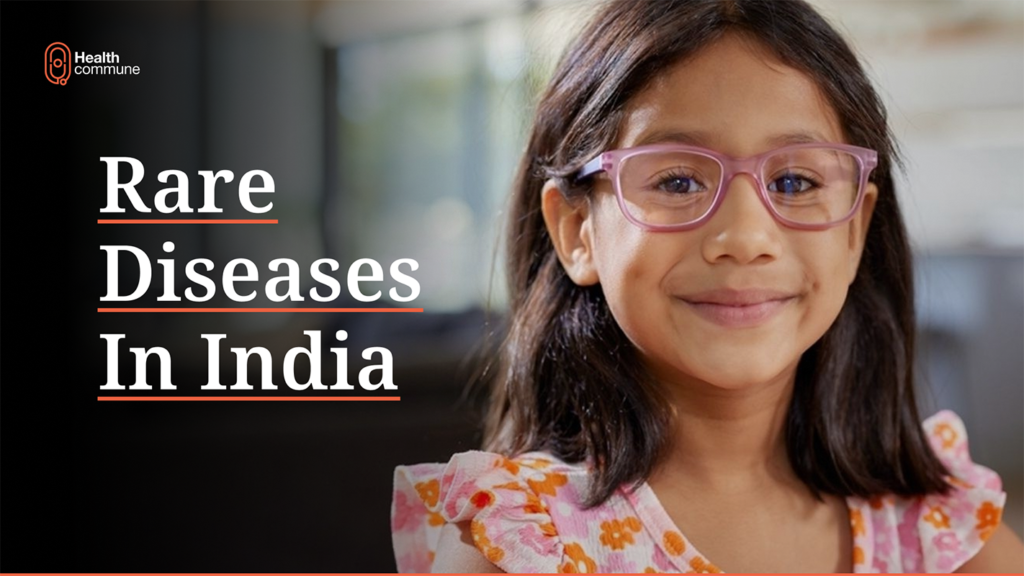
In India, 70 to 100 million people are estimated to be living with a rare disease, and many are still waiting for a diagnosis.
Moreover, a rare disease diagnosis takes an average of 4.8 years to arrive at. By the time a family has a name, they have often already spent years navigating the wrong system, seeing the wrong doctors, and receiving the wrong treatment.
This article addresses what comes after that name arrives.
What does “rare disease” mean?
A disease is classified as rare when it affects a very small proportion of the population. There are approximately 7,000 to 8,000 rare diseases identified globally. Most are genetic. Many are present from birth but go undiagnosed for years because the signs are easy to confuse with more common conditions.
‘Rare’ does not mean ‘untreatable’ in every case. It means fewer people have it, fewer doctors have seen it, and the healthcare system is not designed around it the way it is around diabetes or hypertension.
Why does the diagnosis for a "rare disease” take so long?
Symptoms overlap with common conditions. A child with a metabolic disorder gets treated for nutritional deficiency. An infant with an enzyme deficiency gets told their symptoms are normal. General physicians are not trained to recognise rare presentations. Genetic testing is not routine, and specialist referrals take time.
This is not a failure on the parents’ part but a structural problem in how medicine is built.
What exists to support patients with rare diseases in India?
India’s National Policy for Rare Diseases, 2021, classifies rare diseases into three groups.
Group 1 covers conditions treatable with a one-time intervention, such as a stem cell transplant.
Group 2 covers diseases requiring long-term treatment at a relatively lower cost.
Group 3 covers diseases with available treatment that is lifelong and very high in cost. Enzyme replacement therapy for conditions like Pompe Disease falls under this category.
The policy, amended in 2022, provides financial support of up to Rs. 50 lakhs per patient for treatment at government-designated Centres of Excellence. This support covers all three groups of rare diseases, not just those requiring one-time treatment.
Are these treatments available in India?
Not every treatment available globally is accessible in India. As per a 2023 study conducted in the US, only 5% of rare diseases have an FDA-approved drug, and up to 15% of rare diseases have at least one drug that has been developed and shown promising results in treatment, diagnosis, or prevention.
How does the Union Budget 2026-27 address rare diseases?
India’s Union Budget 2026-27 addresses rare diseases through targeted customs duty exemptions on imported drugs and medical foods for seven additional rare diseases.
However, customs duty on these imports typically runs between 10% and 20% of the medicines’ value. It does not make the medicine cheap, just less expensive than before. For a family spending Rs. 30 lakhs a year on treatment, this could mean saving Rs. 3-6 lakhs annually. The budget only reduces one layer of the cost for some of them.
Is India producing rare disease drugs?
Until recently, every rare disease treatment in India was imported. That is beginning to change.
What are the things rare disease families should know?
The first practical question to ask is which group your child or your condition falls under and whether treatment is available at a designated centre near you.
India has a total of 14 designated Centres of Excellence (COEs) under the National Policy of Rare Diseases (NPRD), 2021.
The Organisation for Rare Diseases India, known as ORDI, is a patient support organisation that works directly with families navigating this process. The organisation currently supports families across more than 400 rare diseases in India and can guide families on diagnosis pathways, connect with specialists, and help understand what government support applies to their specific condition.
Note that the National Policy for Rare Diseases covers 63 identified rare diseases for funding purposes. If your condition is not among these 63, ORDI can still help you navigate what options exist. They can be reached at https://ordindia.in/
References:
- https://www.rarediseases.in/rare-diseases/
- https://www.rarediseases.in/big-relief-union-health-ministry-hikes-financial-grant-for-rare-disease-treatment-from-rs-20-lakh-to-rs-50-lakh-applies-to-all-categories/
- https://ordindia.in/treatment-centers-in-india-govt/
- https://www.clinmedjournals.org/articles/ijrdd/international-journal-of-rare-diseases-and-disorders-ijrdd-2-008.php?jid=ijrdd#abs
- https://rarediseases.mohfw.gov.in/uploads/Content/1624967837_Final-NPRD-2021.pdf
- https://pmc.ncbi.nlm.nih.gov/articles/PMC10290406/
- Fighting against rare diseases together – Sanofi India
- IORD Advocacy: Indian Innovations Slash Costs of 4 Rare Disease Drugs Drastically | IORD – Indian Organization for Rare Diseases
- https://www.ias.ac.in/article/fulltext/jbsc/049/0028#:~:text=ORDI%20has%20currently%20listed%20264%20rare%20diseases%20in,80%25%20of%20these%20diseases%20have%20a%20genetic%20origin
- https://ordindia.in/media/ordi-news/from-rs-77000-to-just-rs-600-india-manufactures-worlds-cheapest-drug-to-treat-sickle-cell-anaemia/
Author

inscienceit
Lorem ipsum dolor sit amet, consectetur adipiscing elit. Ut elit tellus, luctus nec ullamcorper mattis, pulvinar dapibus leo.